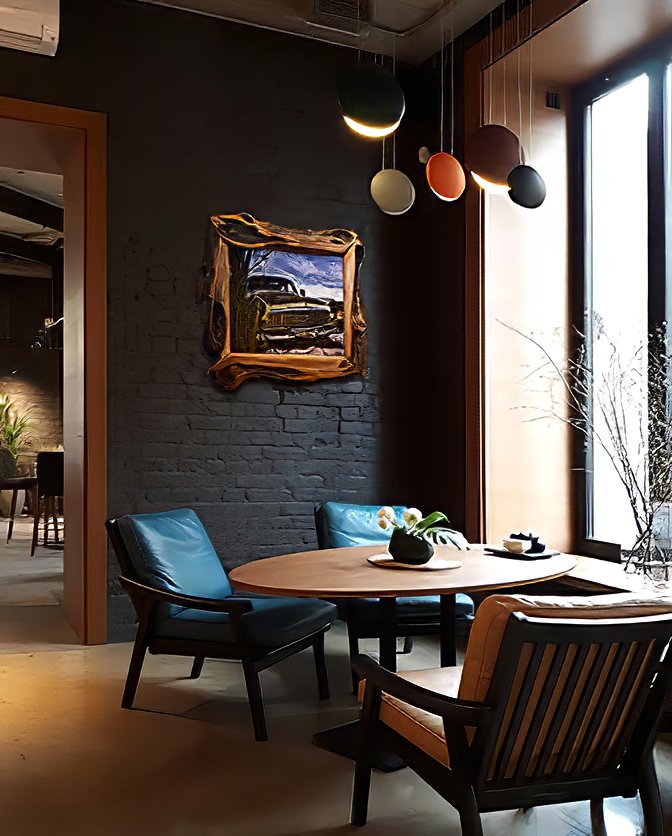
A serious art collection deserves more than an off-the-shelf border. Whether the work is an original oil painting on stretched canvas, a prized limited-edition print, or a generations-old portrait, the frame is the first line of preservation and the final word on presentation. For collectors who have spent years curating a wall, a mass-produced frame is the weak link — uniform, predictable, and built to disappear rather than to elevate.
Why Fine Art Demands More Than a Standard Frame
Museum-grade presentation is not about ornamentation; it is about respect for the work. A frame must protect the piece from light, moisture, and handling while creating a visual threshold that lets the artwork breathe. Factory frames achieve none of this with any distinction. They impose a single, repeatable silhouette on art that is, by definition, singular.
Organic floater framing takes the opposite approach. Rather than flattening the wood into straight, anonymous moulding, it preserves the natural geometry the tree spent decades growing — the swooping live edge, the deep-grained diamonds of rare willow, the weathered contours of river-found driftwood. The result is a border that behaves as an extension of the artwork, not a cage around it.

The Floater Frame, Reimagined by Nature
A floater (or “floater”) frame is the collector’s preferred format for stretched canvas and oil paintings: the artwork appears to float within the frame, its full face visible, the edge of the canvas itself becoming part of the composition. Pair that format with nature-carved wood and the effect is striking — the controlled geometry of the painting set against the wild, asymmetrical silhouette of the border around it.
Asymmetrical, Unrepeatable Silhouette: Each frame is shaped around the wood’s natural contours, so no two borders are alike — the frame becomes a companion piece to the art rather than a uniform trim.
Museum-Grade Ultra-Clear Glass: High-clarity, low-reflection glass protects pigments and canvas from UV and airborne damage while letting the true colours of an oil painting read exactly as the artist intended.
Multi-Position Hanging Hardware: Engineered with multi-position hanging points, a single frame can be rotated to reveal a completely different silhouette and character as the room or collection evolves.
Engineering for the Collector’s Wall
A frame that anchors an architectural focal point has to hold its own weight — literally. Bespoke organic frames are built around hardened, hand-selected timber and fitted with robust, multi-directional hanging hardware engineered for the demands of a gallery wall or a grand foyer. The wood is dried, stabilized, and hand-finished so it will not warp across decades of seasonal humidity.
For oil paintings and stretched canvases, the floater format keeps the painted edge visible and the surface unpressed, avoiding the contact and condensation issues that ordinary rabbet frames create against a canvas. For works on paper, the ultra-clear glass and a generous matting reveal give the piece room to breathe behind a border that draws the eye inward rather than competing for attention.
An Architectural Focal Point, Not an Afterthought
In a high-end interior, the largest framed piece on the wall is rarely background — it is the anchor the room is composed around. A nature-carved organic frame gives that anchor genuine presence: the dramatic grain and asymmetrical contour create a focal point that reads from across the room, then rewards a closer look with the texture of the wood itself.
For collectors who have invested in the art, the frame is where preservation and presentation finally meet. A bespoke organic floater frame protects the work to museum standards while turning the border itself into a piece of natural sculpture — engineered to last, and impossible to replicate.